15 May, 2026 • 10 min read
How Random Video Chatting Can Improve Your English Speaking Skills
Introduction: Why Speaking Practice Matters More Than Grammar
Thousands of people study English every day, memorizing grammar rules and vocabulary lists. But when it comes to actually speaking — they freeze. The truth is simple: fluency comes from speaking, not just studying. You can read hundreds of English books, but if you never use the language in conversation, your progress will feel stuck.
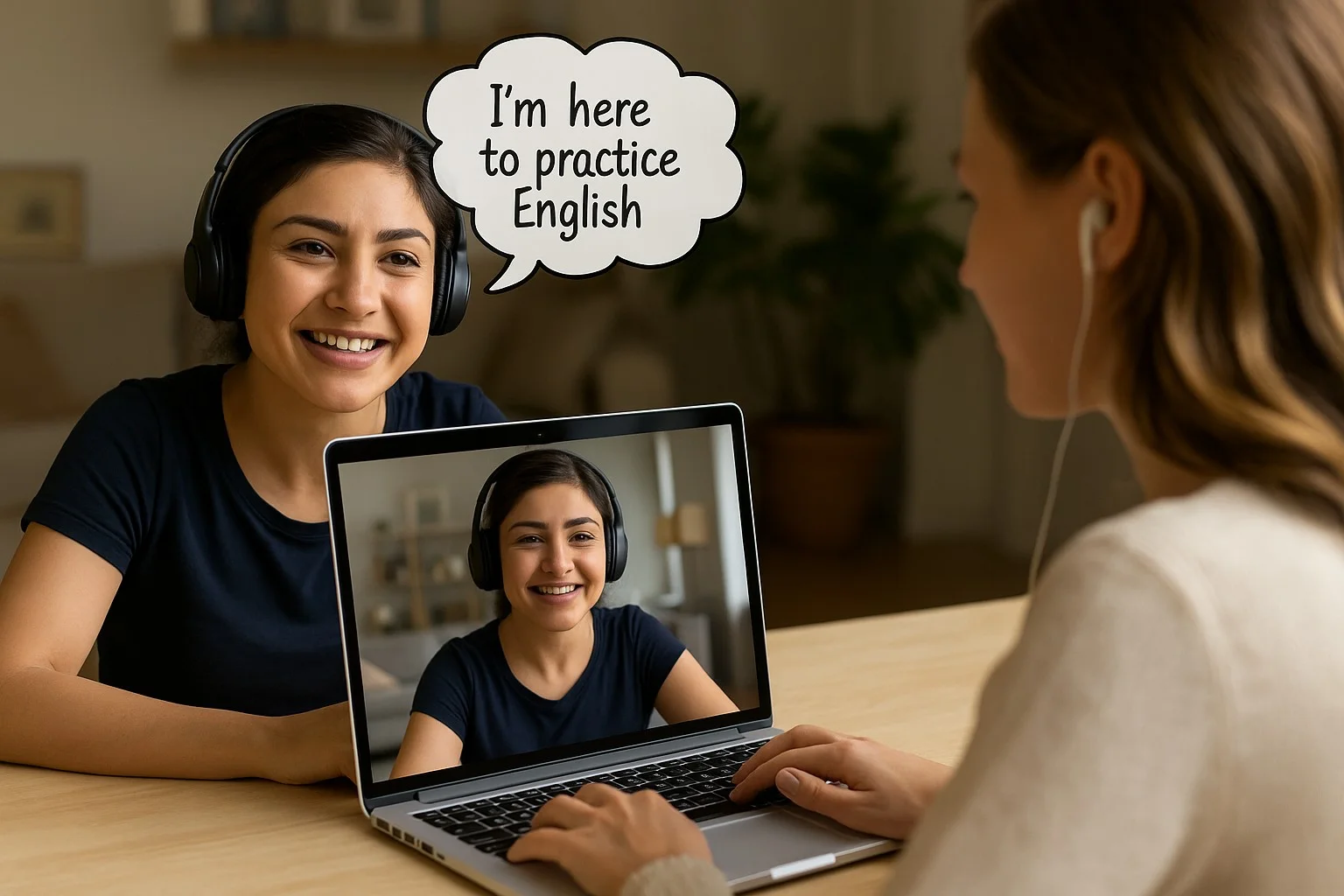
This is where random video chat platforms like this change the game. They allow you to connect instantly with real people around the world who speak English naturally. Talking with native or fluent speakers online gives you something no textbook can — real, spontaneous conversation experience.
In this article, we’ll explore how random video chatting can help you improve your English speaking skills, boost your confidence, and make learning enjoyable. You’ll discover practical tips, personal insights, and smart ways to turn every chat on Wakiee into a mini English class without pressure or boredom.
What Research Says About Video Conversation for Language Learning
Video conversation is not a replacement for structured English study, but research suggests that real-time online interaction can be a useful part of second-language learning. It gives learners opportunities to listen, respond, negotiate meaning, and practice speaking with another person in real time.
students participated in an 18-week study of synchronous online English tutoring with native speakers.
weeks of online tutoring were examined in that speaking-progress study.
was the reported overall effect size for videoconferencing on L2 listening and speaking development in one meta-analysis.
A study of 25 university students found significant improvement in oral proficiency after participants received synchronous online tutoring with native English speakers for 18 weeks. The tutoring involved at least one hour of online speaking practice per week.
A separate meta-analysis examining videoconferencing for second-language learning reported a positive, medium overall effect on listening and speaking outcomes. However, the authors cautioned that the conclusion was based on only five studies, so the result should be interpreted carefully.
The practical takeaway is simple: online conversation can be useful when it is repeated, purposeful, and combined with other forms of language learning.
Research sources: studies published in System and a meta-analysis of videoconferencing for second-language learning.
1. The Secret to Fluency: Real Conversations with Real People
Think about how you learned your first language as a child. You didn’t start with grammar books — you listened, repeated, and practiced. That’s the natural way humans learn to speak, and it still works today. Random video chatting brings that experience back by surrounding you with real voices and expressions.
Why Practice with Real People Works
Language is alive. It changes with tone, emotion, and context — things you can’t learn by reading alone. When you talk to a real person, your brain connects meaning to emotion, making words easier to remember. Every smile, laugh, and expression gives context to what you’re saying.
The “Immersion Effect” Without Traveling Abroad
Immersion — being surrounded by a language — is the fastest way to learn it. Before, that meant moving to another country. Now, with websites like this, you can get the same effect from your home. Every chat becomes a small window into English-speaking culture, complete with accents, humor, and natural phrasing.
It’s not just about learning words — it’s about learning how people actually use them. For example, in textbooks you might learn “How are you?” but in real conversation, people often say “Hey, what’s up?” or “How’s it going?” These nuances only come from real interactions.
2. How Random Video Chat Builds Your English Skills Naturally
Unlike formal learning, chatting online feels relaxed. There’s no teacher grading you and no exam pressure — just two people connecting. That’s why learners often progress faster when they practice conversational English regularly. Many people consider this platform an Omegle alternative.
Improves Pronunciation
Hearing how native speakers pronounce words trains your ear to catch subtle sounds. When you repeat phrases, you unconsciously imitate accent patterns and rhythm. Over time, your pronunciation becomes clearer and more confident.
Pronunciation Practice: What Should You Listen For?
When listening to fluent speakers, don't focus only on individual sounds. Notice how words connect, where the speaker places emphasis, and how their rhythm changes during a sentence.
| Feature | What to notice | Practice idea |
|---|---|---|
| Word stress | Which syllable sounds stronger | Repeat the word with similar emphasis |
| Sentence stress | Which words receive emphasis | Repeat the complete sentence |
| Connected speech | How words flow together | Practice short phrases rather than isolated words |
| Pauses | Where the speaker naturally pauses | Copy the rhythm of a short sentence |
I once practiced with a user from London who said, “You sound more confident now than when we first met!” That feedback came after just two weeks of daily conversations. Small interactions add up faster than you expect.
Expands Vocabulary Naturally
When you speak to different people, you hear new words in real context. Instead of memorizing “business vocabulary” from a list, you learn it when someone actually says, “I just had a meeting with my boss.” This contextual learning sticks better because it’s emotional and practical.
Builds Listening and Thinking Speed
At first, it’s normal to feel overwhelmed by fast speakers. But your brain adapts quickly. The more conversations you have, the faster you’ll understand and respond. You stop mentally translating and start thinking directly in English — the true sign of fluency.
3. Getting Started: How to Use Wakiee for Language Practice
One of the easiest ways to practice speaking English online is through this website. Here’s how to make the most of it, step by step. If you are talking to someone from another country, read our guide to language and cultural phrases you should know.
A Simple 20-Minute English Practice Plan
If you enter a random conversation without a goal, it can be difficult to know whether you actually practiced English. A simple structure can turn an ordinary chat into a focused speaking session.
| Time | Activity | Focus |
|---|---|---|
| 0–3 min | Introduce yourself | Basic speaking confidence |
| 3–8 min | Discuss an easy topic | Vocabulary and fluency |
| 8–14 min | Ask follow-up questions | Listening and spontaneous responses |
| 14–17 min | Ask for one or two corrections | Accuracy |
| 17–20 min | Review useful phrases | Retention and reflection |
You can shorten or extend this structure depending on your level. The important idea is to give each conversation a small purpose instead of trying to improve every English skill at once.
1️⃣ Create a Comfortable Environment
Find a quiet space with good lighting and a stable internet connection. Make sure your webcam and microphone work well — clear sound makes communication smoother and more enjoyable.
2️⃣ Be Honest About Your Level
When you meet someone on the platform, introduce yourself and mention you’re practicing English. Most users are friendly and supportive — honesty helps set the right pace for the conversation.
3️⃣ Start with Simple Topics
Begin with familiar topics like hobbies, food, travel, or culture. The goal isn’t perfect grammar — it’s connection. Over time, you’ll naturally handle deeper conversations like current events or career goals.
4. Overcoming the Fear of Speaking English
Change How You Think About Mistakes
Mistakes are useful when they show you exactly what to practice next. Instead of judging an entire conversation as good or bad, identify one specific improvement.
| What happened | Don't conclude | Instead, practice |
|---|---|---|
| You forgot a word | "My English is bad." | Learn the word and two example sentences |
| You misunderstood someone | "I can't understand English." | Practice clarification phrases |
| You made a grammar mistake | "I should stop speaking." | Write the corrected sentence and reuse it |
| You spoke slowly | "I'm not fluent." | Practice the same topic again later |
Many learners hold back because they're afraid of making mistakes or sounding silly — but every fluent speaker started out stumbling over the same basic phrases, and even native speakers mix up grammar mid-sentence more often than they'd admit. Focusing on getting the message across, rather than getting every word perfect, is what actually moves you forward.
Accept Mistakes as Part of Learning
When I started practicing English online, I was embarrassed by my accent. But my language partners didn’t care — they cared that I tried. They even said, “Your accent is part of your identity.” That mindset shift made me fearless.
Start Small, Build Confidence
Try speaking for 2–3 minutes at first. Gradually increase your time as you get comfortable. On the website, you can meet many people casually, so it feels more like chatting with friends than taking a test.
Smile and Relax
Remember: communication is about connection, not performance. A smile breaks tension instantly. When both sides feel relaxed, language flows naturally.
5. Making Every Chat a Learning Session
Each video chat can become a micro-class if you use it wisely. The trick is to balance fun conversation with learning goals.
Take Notes During or After
Jot down new words or phrases right after each chat. For example, if your partner says “I’m chilling,” note that it means “I’m relaxing.” Keep a small notebook or phone notes — it’s your personal dictionary.
Ask for Corrections Politely
Most people will happily help if you ask, “Can you please correct me when I make a mistake?” Don’t worry — this doesn’t interrupt the flow; it shows you care about improving.
Use Repetition
Repeating sentences helps memory. If your partner says, “That sounds great,” try replying with the same structure next time. Repetition creates confidence — the key to fluency.
6. Turning Language Practice into Cultural Discovery
When you practice with real people, you don’t just learn a language — you learn their world. Every conversation reveals something about traditions, humor, or everyday life in another culture.
Ask Cultural Questions
Don’t hesitate to ask things like, “What’s a typical breakfast in your country?” or “How do people greet each other there?” These friendly questions make conversations interesting and memorable.
Share About Your Own Culture
Language learning is a two-way exchange. Talk about your own food, festivals, or holidays. It keeps the chat balanced and builds mutual respect. I once explained Diwali to a British friend, and he told me about Bonfire Night — a cultural connection born through language.
Learn Idioms and Humor
Idioms give insight into how people think. When someone says “break the ice” or “it’s raining cats and dogs,” they’re expressing culture, not just words. You’ll sound more fluent once you start using them naturally.
7. How Random Video Chat Boosts Confidence in Real Situations
Practicing English online prepares you for real-life scenarios — interviews, travel, or social events. Every chat builds communication instincts, helping you handle spontaneous situations better.
Handling Real Conversations Smoothly
After a few weeks of practice, you’ll notice yourself responding faster and more naturally. You’ll stop translating in your head and start thinking in English. That mental shift is what true fluency feels like.
Speaking Without Overthinking
Video chatting teaches quick response. Unlike written chat, there’s no time to overthink grammar — you just speak. That’s how you develop instinctive language ability, which is vital for natural conversation.
Adapting to Different Accents
English is spoken with many different accents and varieties. Exposure to different speakers can help learners become comfortable with differences in pronunciation, rhythm, vocabulary, and conversational style. However, hearing different accents does not guarantee that you will understand every speaker, so treat unfamiliar speech as practice rather than a test.
| English variety | What a learner may encounter | Useful practice |
|---|---|---|
| American English | Different regional pronunciation and vocabulary | Listen for reduced sounds and everyday expressions |
| British English | Multiple regional accents and vocabulary differences | Practice understanding unfamiliar vowel sounds and expressions |
| Indian English | Regional pronunciation patterns and locally common expressions | Focus on understanding meaning rather than copying an accent |
| Australian English | Distinct pronunciation, rhythm, and vocabulary | Listen for context when unfamiliar expressions appear |
8. Maintaining Long-Term Learning Motivation
Consistency is the difference between beginners and fluent speakers. Keeping your motivation high focuses progress that lasts.
Track Your Progress
Record short voice clips of yourself every week. Listen after a month — you’ll notice real improvement. Hearing your progress is the best motivation to keep going.
Set Mini Goals
Example goals: “Speak English for 10 minutes daily” or “Learn five new phrases this week.” Achieving small wins gives you satisfaction and momentum.
Make Friends, Not Just Practice Partners
Friendship makes learning effortless. When you genuinely connect with people through the service, practice stops feeling like homework — it becomes something you look forward to every day.
9. Staying Safe While Chatting Online
Safety is essential in any online environment. Use platforms that protect user privacy and provide moderation tools.
Use Secure Platforms
This platform is designed to provide a safe, respectful environment for users to talk freely while using appropriate safety tools. Avoid unverified random sites — they often lack moderation and data protection.
Protect Your Personal Information
Never share private details like your address, contact number, or banking info. Keep your interactions focused on friendship and learning.
Stay Positive and Respectful
Even if someone has a different opinion or accent, stay kind. Cultural sensitivity keeps conversations friendly and comfortable for everyone.
10. Using Wakiee for Practicing English
Wakiee can be used as one part of an English-speaking routine. Instead of treating every conversation as a formal lesson, use random conversations to practice specific skills such as introductions, listening, pronunciation, vocabulary, and spontaneous responses.
Practice With Different Speakers
Different conversation partners may use different accents, vocabulary, expressions, and speaking speeds. This can give you exposure to a wider range of English than repeatedly practicing with only one speaker.
Choose One Goal Per Conversation
You might spend one conversation practicing introductions, another discussing hobbies, and another focusing on asking follow-up questions. Keeping the goal small makes it easier to notice progress.
Combine Conversation With Structured Learning
Random conversations should complement rather than replace grammar study, vocabulary review, reading, listening practice, and writing. Use conversations to put what you learn into practice.
The most useful way to approach Wakiee is therefore as a conversation-practice environment rather than as a complete English-learning program.
Instant Global Access
Connect with native and fluent speakers from dozens of countries instantly. No apps, no waiting — just click and start chatting. You’ll meet people of all accents and ages, making every session unique.
Safe and Friendly Community
The platform prioritizes respect and moderation, helping users practice without unnecessary negativity or pressure. This makes it useful for beginners and advanced learners alike.
Fun Way to Build Confidence
Because conversations feel casual, users practice more frequently — and without fear. You forget it’s “study” and just enjoy meeting new people while improving naturally.
Conclusion: Speak Boldly, Learn Naturally
Fluency isn’t about knowing every word — it’s about courage to communicate. Random video chat gives you that courage by connecting you with real voices and experiences.
With this website, you can turn every chat into an opportunity to grow. Laugh, listen, make mistakes, and keep talking — that’s how you build confidence in English.